
EDUCATION CONNECTION BRINGS YOU HUNDREDS OF SCHOOLS, THOUSANDS OF PROGRAMS AND MILLIONS OF MATCHES.

It’s Fast
Simply tell us here at Education Connection a little bit about yourself and your goals by answering a few questions –it only takes a few minutes!

It’s Easy
Education Connection will instantly select schools for you based on your educational needs and goals.

It’s Free
Education Connection is FREE! There’s no cost, risk or obligation – just a chance to enhance your credentials and change your life.

WHAT DO STUDENTS SAY ABOUT EDUCATION CONNECTION?
Education Connection just really made it nice and easy for me to get enrolled into college and start doing what I love doing.”
Dennis Lippiett-Scanton, PA
Financial Aid Resources

Grants and Scholarships
When it comes to paying for higher education, you have numerous options to consider. First on your list should be to apply for grants and scholarships, mainly because…

Military Benefits
As a member of the military, whether active or inactive, you are eligible for a variety of benefits to help you with your education. You can also check out our list of Military Friendly Colleges.

Student Loans
With the increasing cost of education, many students find that the funds they receive from financial aid sources (grants, scholarships, work-study and federal loans) do not cover…






EDUCATION CONNECTION MOST POPULAR TV COMMERCIALS

2016 – EDUCATION CONNECTION RAP
To get gain knowledge you have to go back to college. Who can help? Education Connection!

2021 – Huge Decision
If you’re stressed by all the schools out there, you HAVE to try EducationConnection.com.

2022 – Get Connected
There is a quick, easy and free site that can help you sift through your choices.
2012 Education Connection Commercial
Get Matched for Free
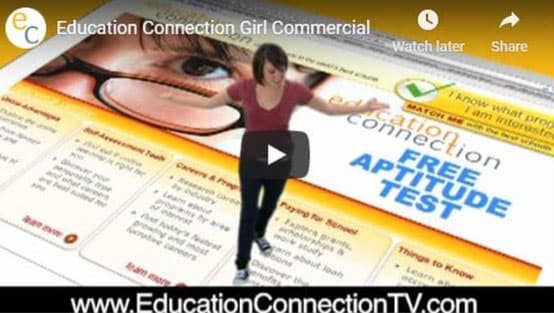
Education Connection has released a variety of memorable commercials over the years. Whether you’re a fan of the “Get Connected For Free” pop song, or are interested in seeing testimonials from real users, you’ve come to the right place. So check out our latest commercial and catchy tune.